The Other Side of Sesame.
On the depth of a familiar seed, the character of black sesame, and what happens when an ingredient is allowed to be more than a finishing touch.
By Andre Ford
Sesame has a way of making itself indispensable without attracting much attention.
It appears scattered across bread, pressed into crackers, stirred into sauces, or caught in the crust of something fried. Often, it is the last ingredient added, a finishing touch that supplies texture and a little visual interest. We recognize it immediately, but rarely give it much consideration.
That is an unusual position for an ingredient with so much character.
Toast sesame seeds in a dry pan and the kitchen changes almost immediately. The aroma becomes warm and nutty, then increasingly complex as the seeds begin to color. Grind them into a paste and their personality changes again. The texture becomes dense and oily, the flavor more concentrated, with a bitterness that can be surprisingly elegant.
Black sesame takes that experience somewhere darker.
Its appearance is dramatic, certainly, but the attraction goes beyond color. Black sesame has a rich, roasted character that works particularly well against sweetness. It can make chocolate taste more substantial, give a simple cake unexpected depth, and turn a familiar dessert into something that demands a second bite.
For an ingredient so small, it has an impressive capacity to change the conversation.
An Ingredient Without Borders
Sesame, Sesamum indicum, is among the oldest cultivated oilseed crops. Its history extends across Africa and Asia, where it became an important source of oil and a remarkably versatile food ingredient.
Its culinary reach is extraordinary.
In the Middle East, sesame is ground into tahini, forming the foundation of sauces, sweets, and preparations such as halva. Across East Asia, toasted sesame oil is used for its concentrated aroma, while sesame seeds and pastes appear in both savory dishes and confections. In Japanese cooking, black sesame finds its way into ice cream, pastries, and traditional sweets. Chinese black sesame soup, often called zhi ma hu, transforms ground seeds into a rich, dark dessert with a distinctive roasted flavor.
West African cooking has its own long relationship with sesame, including preparations using the seeds and their oil. Through trade, migration, and agriculture, sesame also became established in other parts of the world.
These traditions do not all treat sesame the same way. Some emphasize its oil, others its texture or its ability to form a paste. Certain preparations bring its bitterness forward; others soften it with sugar.
That variety is part of what makes the ingredient interesting.
Sesame is not confined to a particular cuisine or a single culinary identity. Its usefulness has allowed it to become deeply embedded in different food cultures, each developing its own understanding of what the seed can do.
Black and White
The distinction between black and white sesame deserves some attention, particularly in baking.
White sesame seeds are often sold hulled, which removes the outer seed coat and produces a milder, more delicate flavor. Black sesame is commonly sold with its hull intact. That difference affects both texture and taste.
Black sesame is frequently described as more intense, earthy, or bitter than white sesame. Those descriptions can be useful, although the flavor also depends on the variety, whether the seeds have been hulled, and how they have been processed.
Roasting changes everything.
Heat encourages the development of aromatic compounds that give toasted sesame its recognizable nuttiness. The transformation can be subtle at first, then increasingly pronounced. A properly toasted seed develops depth without losing its natural sweetness. Take it too far and bitterness begins to dominate.
That boundary matters, especially when sesame is intended to carry a dessert rather than merely decorate it.
Sesame paste introduces another consideration. Unlike whole seeds, which offer small bursts of flavor, paste distributes the seed’s oils and solids throughout a preparation. It creates a more continuous presence on the palate.
A black sesame paste can therefore produce a much stronger impression than the same ingredient used as a topping.
It also changes texture. Sesame contains substantial amounts of oil, and incorporating a concentrated paste into cake batter or another mixture alters the balance of fat and solids.
A good result depends on recognizing that the paste is not simply a flavoring.
It is part of the structure.
The Case for Bitterness
Western desserts often approach bitterness cautiously.
Chocolate is an obvious exception, although even there, bitterness is frequently moderated with substantial amounts of sugar and dairy. Coffee receives similar treatment. Caramel is sometimes allowed to become dark enough to develop a slightly bitter edge, but many desserts remain firmly committed to sweetness as their defining characteristic.
Sesame offers another possibility.
Its bitterness is generally less aggressive than that of dark chocolate or espresso. Instead, it sits beneath the other flavors, providing contrast and a lingering roasted quality.
That makes it particularly effective in baking.
Brown sugar, butter, ripe bananas, and chocolate all have qualities that benefit from something less sweet alongside them. Sesame can supply that counterpoint without introducing a completely foreign flavor.
There is also a difference between making a dessert less sweet and making it taste less sweet.
A recipe can contain a perfectly ordinary amount of sugar and still feel restrained because the other ingredients create contrast. Salt accomplishes this in one way. Acidity does it in another. Roasted bitterness contributes something different, extending the flavor beyond the initial impression of sweetness.
That is the quality I want from sesame.
Not a novelty flavor, and certainly not a dark color added for effect.
I want the seed to change how the entire dessert tastes.
Two Expressions of Sesame
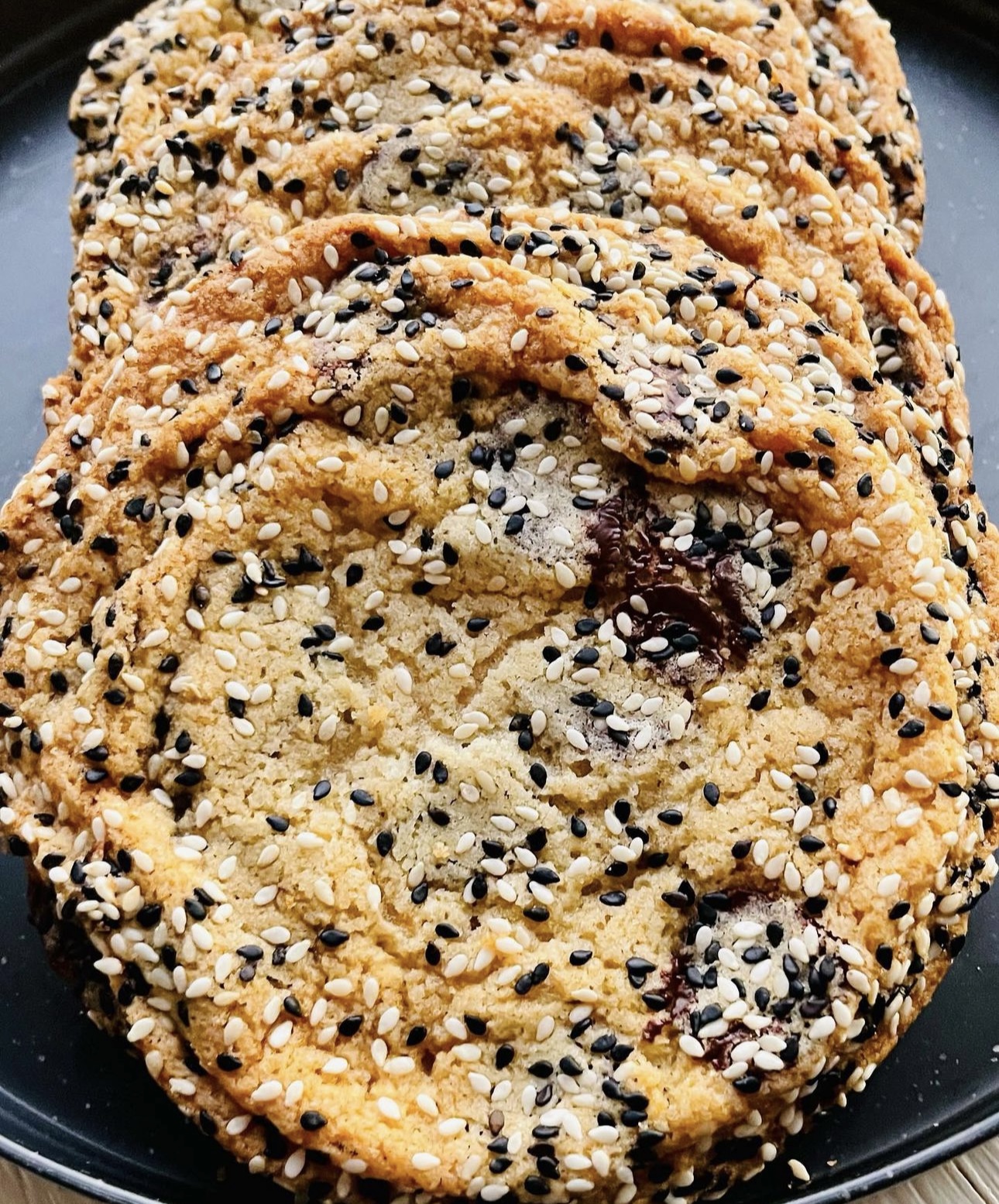
Sesame Chocolate Chip Cookies
Dark chocolate and a black-and-white sesame crust.
VIEW RECIPE →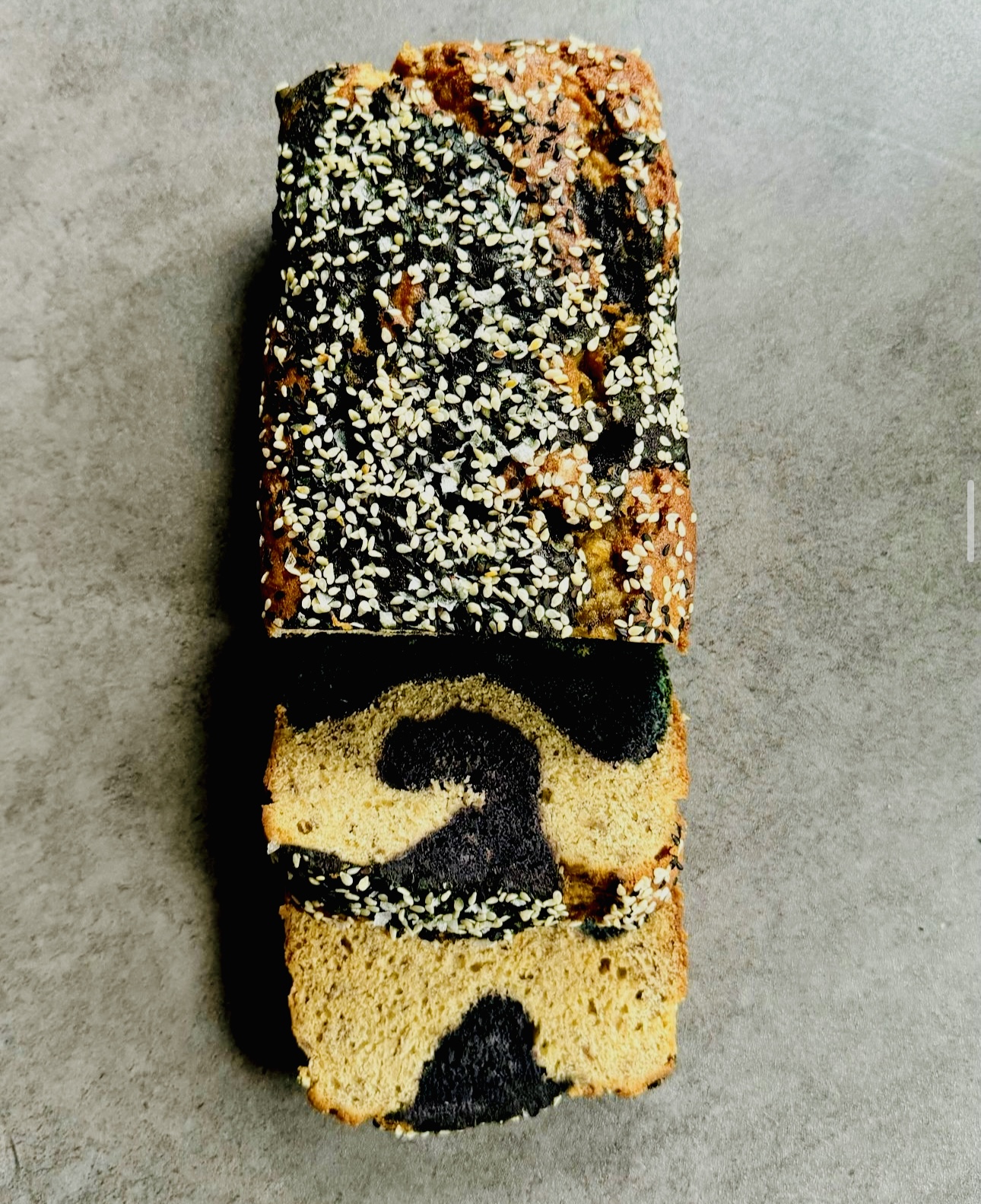
Marbled Sesame Banana Bread
Banana loaf with ribbons of black sesame paste.
VIEW RECIPE →These recipes begin with familiar preparations, which is precisely why they make useful examples.
A chocolate chip cookie does not need an elaborate explanation. Its success depends on a relatively straightforward balance of fat, sugar, flour, and chocolate, along with the decisions that determine texture.
The sesame coating introduces another dimension.
As the cookies bake, the seeds toast against the heat of the oven, developing a fragrant crust around a softer center. Chopped dark chocolate contributes bitterness of its own, while brown sugar supplies a deeper sweetness than white sugar alone.
The small amount of toasted sesame oil in the dough is deliberate. Sesame oil can become overpowering very quickly, particularly in sweet preparations. Used with restraint, it reinforces the flavor of the seeds without making the cookie taste like a savory dish.
The banana bread approaches the ingredient differently.
Ripe bananas bring moisture, sweetness, and a flavor that can easily dominate a loaf. Black sesame paste provides a counterweight, but it must be incorporated thoughtfully.
Rather than mixing the paste into the entire batter, I prefer separating a portion and creating a concentrated sesame mixture. Alternating the two batters produces distinct ribbons, allowing the banana and sesame to remain recognizable.
The marbling is visually appealing, but it serves another purpose. Each slice contains a slightly different proportion of the two flavors.
One bite might be mostly banana. The next might carry a pronounced roasted sesame note.
The loaf becomes more interesting without becoming complicated.
The Importance of Restraint
There is a tendency when developing a recipe around a particular ingredient to keep adding it until there is no possibility of missing the point.
More sesame seeds. More sesame paste. More sesame oil.
Eventually, the supporting ingredients have very little room left to contribute.
That approach rarely produces the most balanced result.
Sesame is unusually versatile because it can operate at different intensities. A few toasted seeds offer texture and aroma. A spoonful of paste contributes body and a sustained flavor. Sesame oil can provide a concentrated aromatic accent with very little volume.
Each form has a different job.
In the cookies, I want the chocolate to remain recognizable. The sesame should deepen the experience rather than compete for control.
In the banana bread, the black sesame should be unmistakable, but the banana still needs to taste like banana.
This is a distinction worth preserving.
A successful ingredient-led dessert does not necessarily taste as strongly as possible of its featured ingredient. It tastes as though the ingredient belongs there.
Beyond the Photograph
Black sesame photographs beautifully.
Against a golden cake crumb, its dark ribbons can look almost architectural. Mixed black and white seeds create an attractive pattern across a cookie’s surface. The contrast is immediate and graphic.
It would be easy to stop there.
But visual contrast is only the beginning of what sesame offers.
Its real appeal is revealed through heat, grinding, and the way its roasted flavor interacts with other ingredients. The transformation from a tiny seed into something rich enough to define a dessert is considerably more interesting than the color alone.
I like the idea of a sesame-coated chocolate chip cookie eaten while the chocolate is still slightly soft. The seed crust gives way first, followed by butter, brown sugar, and dark chocolate.
I like a thick slice of marbled banana bread, lightly toasted so the edges become crisp, with the sesame’s roasted character coming through against the sweetness of the fruit.
Neither needs an elaborate presentation.
Both benefit from the same principle: allow an ingredient to contribute what makes it distinctive, then give everything else enough space to work.
Sesame has spent a great deal of time being treated as a garnish.
It is more than capable of carrying the dessert.