Maillard.
On the chemistry of browning, the beauty of controlled heat, and why the most interesting flavors often develop at the edge of burning.
By Andre Ford
There is a moment in baking when color becomes a question of judgment.
A pale crust begins to turn gold. Gold deepens into amber, then brown. The aroma changes alongside it, becoming warmer, richer, and more complicated. At some point, instinct suggests that whatever is in the oven has had enough.
Sometimes that instinct is wrong.
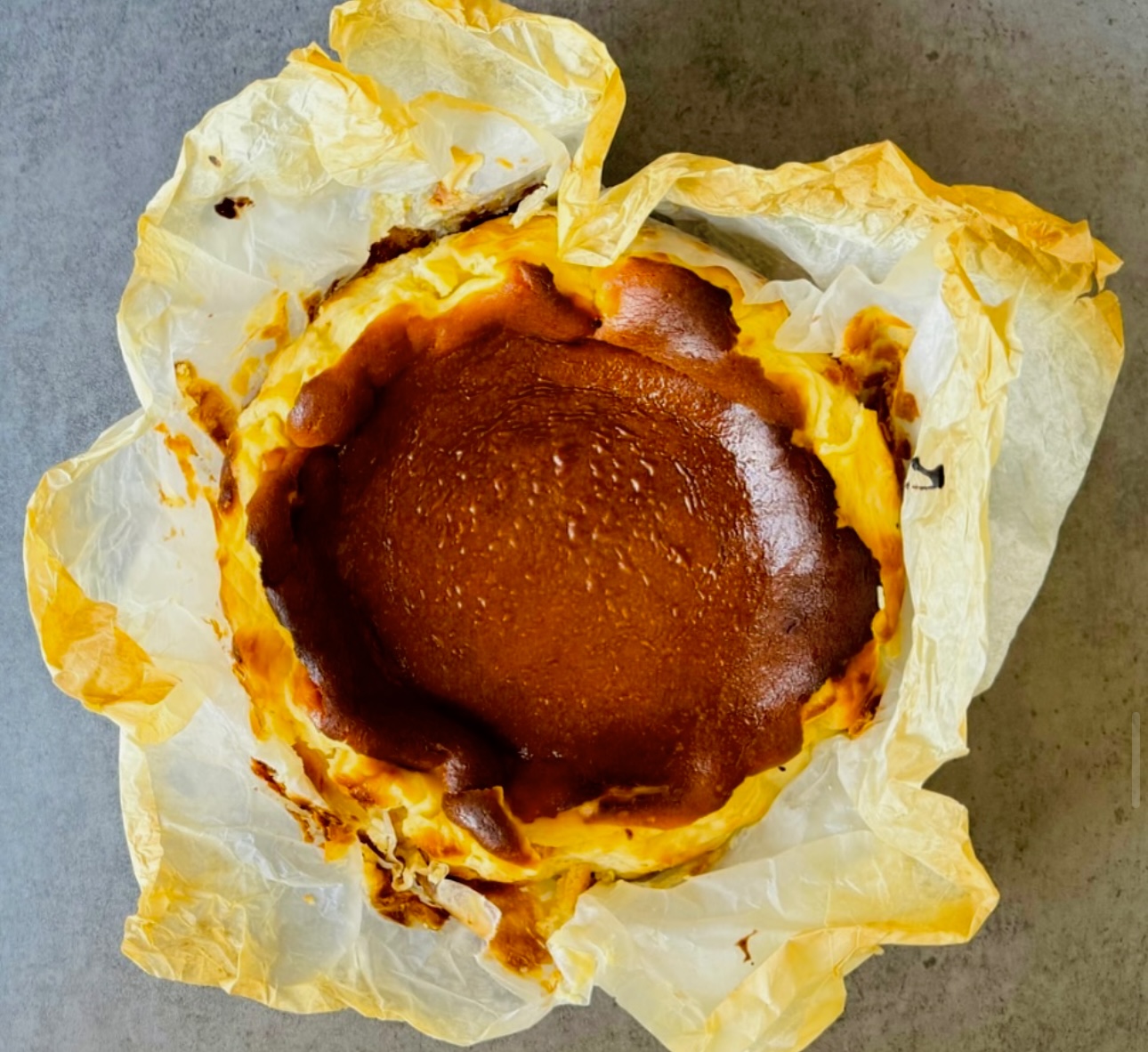
Consider a Basque cheesecake. Its surface emerges from the oven an improbable shade of brown, often approaching black. By the standards of a conventional cheesecake, it appears to have suffered a serious mistake. The top is blistered, the edges are deeply colored, and the entire cake looks as though someone forgot to remove it from the oven.
Yet beneath that dark exterior is a soft, delicate custard.
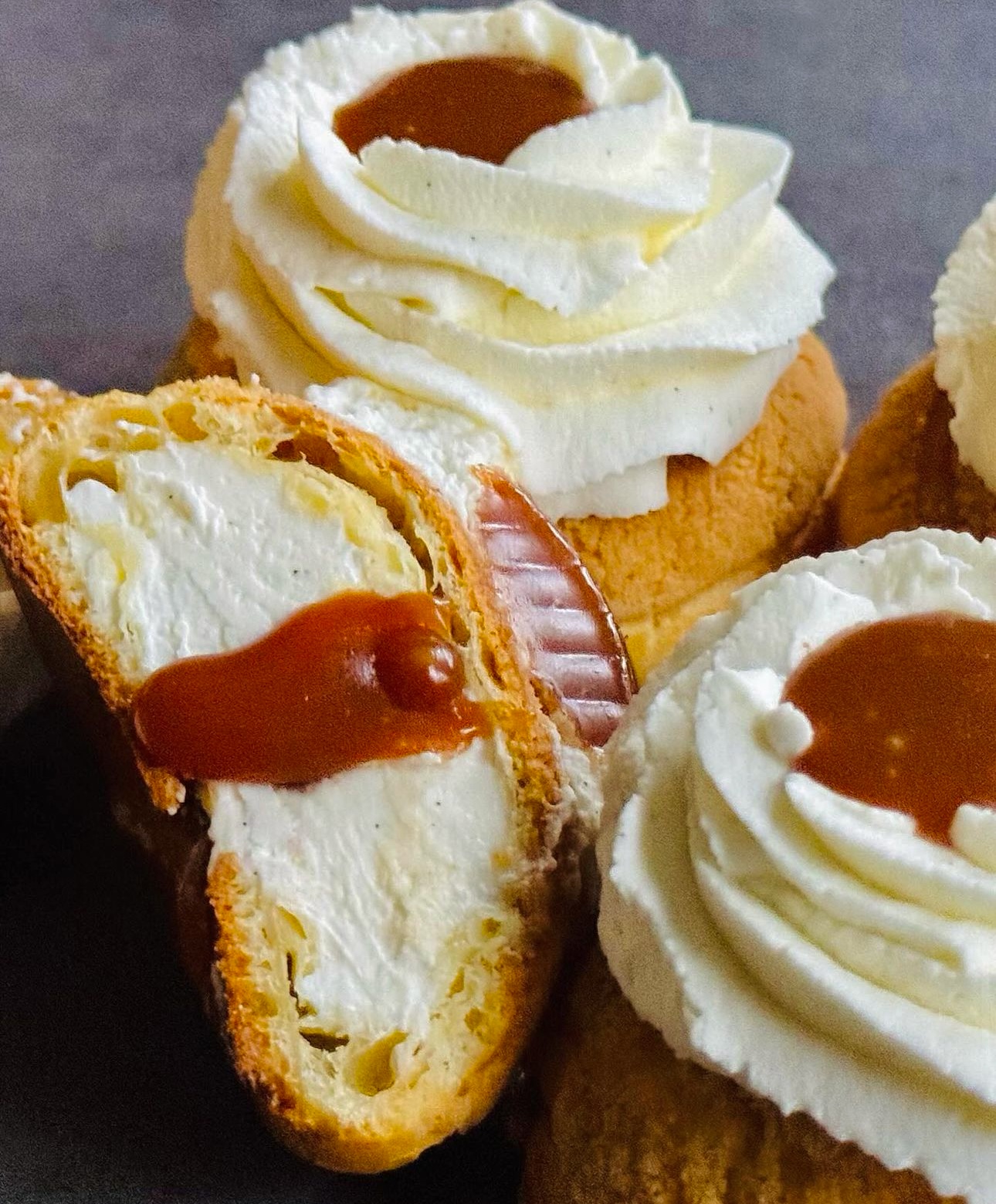
Or consider choux au craquelin. Its surface is golden, fractured, and crisp, formed by a thin layer of sweet pastry that spreads and cracks as the choux expands beneath it. The appeal depends as much on the transformation of that outer layer as on the airy pastry inside.
Both desserts ask us to understand what heat does beyond simply cooking something through.
They also introduce one of the most consequential processes in the kitchen: the Maillard reaction.
The Chemistry of Appetite
In 1912, French chemist Louis-Camille Maillard described reactions between amino acids and sugars that would eventually carry his name.
He was not attempting to explain why a loaf of bread smells wonderful or why a roasted piece of meat develops a savory crust. His work concerned chemical reactions, particularly those involving amino compounds and sugars.
The culinary significance became clearer through subsequent research.
The Maillard reaction is not one simple event. It is a network of chemical transformations that begins when certain sugars react with amino compounds, including those present in proteins. As the reactions progress, they generate numerous compounds responsible for flavor, aroma, and color.
Some contribute roasted or nutty notes. Others evoke toast, malt, or the familiar richness of baked goods. Continued reactions can produce brown pigments collectively known as melanoidins.
This is part of why the surface of a baked pastry can taste fundamentally different from its interior.
The ingredients may be identical, but their exposure to heat has created a different collection of flavor compounds.
Temperature matters, although there is no single temperature at which the Maillard reaction suddenly switches on. It can occur under a range of conditions, including relatively low temperatures over extended periods. In cooking, it generally becomes more pronounced as surface temperatures rise and moisture decreases.
Water complicates the process.
A wet surface tends to remain near the boiling point of water while substantial moisture is evaporating. Once the surface dries sufficiently, its temperature can rise further, allowing browning reactions to accelerate.
That is why a dry crust can develop deep color while the moist interior remains pale.
It is also why browning cannot be understood by looking at oven temperature alone.
The temperature of the food’s surface is what matters.
Maillard Is Not Caramelization
The two terms are frequently used interchangeably, particularly when discussing pastry.
They describe different chemistry.
Caramelization involves the thermal transformation of sugars. It does not require amino acids or proteins. Under sufficient heat, sugars undergo reactions that create new flavors, aromas, and colors.
The Maillard reaction, by contrast, requires suitable sugars and amino compounds.
In a kitchen, the two processes may occur alongside one another. A dessert containing sugar, flour, eggs, and dairy provides ample opportunity for overlapping transformations, especially as its surface becomes hotter and drier.
This is particularly relevant to Basque cheesecake.
The deeply browned exterior is often described as caramelized, and that description captures part of the sensory experience. But the surface also contains proteins from cream cheese, eggs, and cream, along with sugars capable of participating in Maillard chemistry.
Its color and flavor cannot be attributed confidently to one reaction alone.
That distinction is worth making because it reveals something important about pastry: the finished flavor is rarely the product of a single ingredient or chemical process.
Heat creates interactions.
A cake’s surface is not merely the same batter in a different color. It has undergone transformations that change how it tastes and smells.
The Beauty of Almost Burnt
Traditional cheesecakes are often exercises in restraint.
They are baked gently, sometimes in water baths, to limit temperature gradients and protect the custard from overcooking. A smooth surface, pale color, and minimal cracking are usually considered desirable.
Basque cheesecake reverses those expectations.
Associated with the restaurant La Viña in San Sebastián, Spain, the style became known for its dark top, irregular shape, and soft interior. It dispenses with the biscuit crust and embraces the dramatic appearance that more conventional cheesecake recipes attempt to avoid.
The contrast is deliberate.
In my version, cream cheese, sugar, eggs, heavy cream, and a modest amount of flour form a batter that is baked at 400°F. The oven must deliver enough heat to develop a deeply colored surface while leaving the center tender.
The parchment-lined pan is part of the preparation’s character. Its folds create irregular edges, and its height allows the batter to rise without demanding the neat geometry of a conventional cake.
As the cheesecake bakes, the top darkens and the cake expands. Moisture escapes from the exposed surface, which allows browning to intensify. Meanwhile, the center heats more slowly.
The challenge is deciding when to stop.
A dark top alone does not establish that the cake is ready. Nor does a visibly trembling center necessarily mean that it is underbaked.
The goal is a balance between the two.
When removed from the oven, the cheesecake should be deeply colored, puffed, and still noticeably mobile in the middle. As it cools, the structure settles and the center firms. Refrigeration completes the transformation, producing a custard that can be sliced without losing its softness.
The dark surface contributes a slightly bitter, roasted counterpoint to the rich interior.
Without it, the cake would be an entirely different dessert.
There is, however, a meaningful distinction between deliberate browning and uncontrolled burning. A surface that becomes excessively charred can develop harsh, acrid flavors that overwhelm the custard beneath it.
The objective is not to make the cake as black as possible.
It is to develop the greatest depth of flavor without sacrificing what makes the interior worth eating.
Architecture in the Oven
Choux au craquelin presents a different relationship between heat, moisture, and browning.
Where Basque cheesecake relies on a dramatic contrast between its surface and center, choux pastry depends on the careful management of expansion.
A choux dough begins on the stovetop.
Milk, water, butter, sugar, and salt are heated together before flour is incorporated. The mixture is cooked until it forms a cohesive paste, allowing the starch to gelatinize and some moisture to evaporate.
Eggs are then added gradually, producing a smooth, glossy dough capable of holding its shape when piped.
In the oven, water within the dough turns to steam. The expanding vapor helps inflate the pastry while its starches and proteins form a structure capable of supporting the resulting hollow interior.
The process requires enough heat to encourage expansion, followed by sufficient drying to prevent collapse.
Craquelin adds another element.
A thin sheet of butter, brown sugar, and flour is chilled, cut into discs, and placed over the piped choux. As the pastry rises, the craquelin softens and spreads across its surface. The expanding choux fractures the layer into the characteristic cracked pattern.
It is a remarkable piece of pastry engineering.
The craquelin must be thin enough to expand with the dough but substantial enough to create a crisp exterior. Too thick, and it can interfere with the pastry’s development. Too thin, and it may fail to provide the intended texture.
As the surface bakes, its flour and sugar contribute to browning through a combination of reactions, including Maillard chemistry and sugar transformations.
The resulting crust is not simply decorative.
It changes the way the pastry breaks between the teeth, creating an immediate contrast with the light shell beneath it.
My version pairs that structure with mascarpone cream and salted caramel.
The cream is cool, rich, and relatively delicate. The caramel introduces a deeper sweetness and a slight bitterness, depending on how far the sugar is cooked. Together, they create several distinct textures and flavor intensities within one pastry.
The choux provides the architecture.
The craquelin gives that architecture a flavorful surface.
And heat makes both possible.
Two Expressions of Heat
Burnt Basque Cheesecake
Deeply browned exterior, soft cream-cheese custard.
VIEW RECIPE →Choux au Craquelin
Crisp craquelin, mascarpone cream and salted caramel.
VIEW RECIPE →The two preparations could hardly be more different in texture.
One is dense, creamy, and deliberately soft. The other is hollow, crisp, and dependent on structural integrity.
Yet both illustrate how browning and internal cooking must be managed independently.
The cheesecake needs a deeply colored surface before the center becomes too firm. The choux must develop enough color and dryness to support its shape without sacrificing the delicate structure created by steam.
In both cases, the oven is doing several things at once.
Proteins are changing structure. Starches are gelatinizing. Water is moving and evaporating. Sugars are undergoing chemical transformations. Browning reactions create aromas and flavors that were not present in the uncooked ingredients.
The finished pastry is the result of coordinating those processes.
That coordination is what makes baking a craft rather than a sequence of temperatures and times.
A recipe can tell you to bake something for fifty minutes. It cannot guarantee that your oven behaves exactly like mine, that your pan conducts heat in the same way, or that your ingredients begin at precisely the same temperature.
Those variables affect the result.
Understanding what should happen is therefore more valuable than memorizing how long it usually takes.
Learning to Read Color
One of the most useful skills in pastry is developing an eye for color.
Not simply recognizing when something is golden brown, but understanding what different shades indicate about the cooking process.
Pale gold may suggest that a crust has begun to develop but has not reached its full aromatic potential. Amber can indicate a deeper concentration of roasted flavors. Dark brown may bring welcome bitterness or signal that the margin for error has become narrow.
These are not universal rules. Different ingredients brown differently, and color alone cannot establish whether a food is fully cooked or safe to eat.
Still, visual judgment matters.
The surface of a cheesecake can reveal whether browning is developing evenly. The craquelin on a cream puff can indicate whether the outer pastry has become crisp. Aroma supplies another clue, often changing noticeably as a pastry moves from lightly baked to deeply browned.
Sound and touch matter as well.
A crisp pastry breaks differently from a soft one. A properly baked choux shell feels lighter than its size suggests. A Basque cheesecake moves differently in the pan depending on how far its center has set.
These observations become more useful with repetition.
The more frequently you bake, the more familiar the transitions become. You begin to recognize the difference between a surface that needs another few minutes and one that is about to move beyond the flavor you intended.
There is no substitute for that experience.
Beyond the Recipe
The Maillard reaction is sometimes presented as a culinary secret, a scientific explanation that suddenly makes ordinary cooking seem more sophisticated.
But cooks were browning food long before the chemistry had a name.
Bread was baked until its crust developed color. Meat was roasted. Grains were toasted. Sugar was heated until it transformed. Generations of cooks learned to recognize the aromas and appearances associated with desirable results.
Science did not invent those observations.
It helped explain them.
That explanation is useful because it allows us to make more informed decisions. Understanding why a wet surface resists browning, why different ingredients develop different aromas, or why a crust can become flavorful while the interior remains tender gives us greater control.
It also encourages us to question instructions that treat color as an afterthought.
A deeply browned surface is not always a defect. A pale surface is not always a sign of refinement. Neither is desirable in every preparation.
The appropriate degree of browning depends on what we are trying to achieve.
In Basque cheesecake, darkness is central to the dessert’s identity. In choux au craquelin, the surface needs to be crisp and well developed, but excessive browning would undermine the delicacy of the pastry.
Both demand restraint, though they express it differently.
I like the moment when a Basque cheesecake comes out of the oven looking almost impossibly dark, its center still moving beneath the surface. I like the first crack of a craquelin shell, followed by cool mascarpone cream and the deeper sweetness of salted caramel.
Neither experience would be the same without the transformations that occur in the oven.
And neither can be reduced to the instruction to bake until brown.
The more interesting question is how brown, for how long, and to what end.
That is where technique becomes judgment.
And where heat becomes flavor.